Auto Service App
A connected service ecosystem for Stellantis customers, service advisors, and dealership teams.
Client
Stellantis
Role
Lead UX Designer
Duration
2 months (August - October 2023)
Tools
Figma
#
User journeys
#
UI Design
#
UX strategy
Project
Overview
Stellantis car owners and dealership employees were using separate tools and channels to manage service-related tasks. This created a fragmented experience for customers and inefficient workflows for dealership teams.
This project focused on designing a unified digital ecosystem with two connected mobile experiences: one for car owners to manage their vehicle ownership journey, and one for dealership employees to streamline appointments, inventory, communication, and service operations.
Challenge
The service experience was spread across multiple apps making it difficult for both customers and dealership teams to align. Car owners had limited visibility into their vehicle information, appointments and service updates, while employees were juggling inventory, scheduling and communication across disconnected tools. I needed to bring these experiences together into a unified ecosystem that worked for both user groups making the overall service journey clearer.
Impact
This project made the service experience simpler and more connected for both customers and dealership teams. It streamlined key tasks such as booking appointments, confirming service visits, and managing parts orders, while also highlighting opportunities to use AI and data more effectively to improve decision-making and create a smoother ownership experience.
Role
As the Lead UX Designer, I was responsible for the end-to-end user experience. I mapped the existing service journey, identified pain points and worked to simplify workflows. From there, I designed user flows to high-fidelity interactive prototypes to handoff to the development team.
01.
Servicing a car isn't easy.
One service appointment can involve multiple teams, systems, and handoffs before a customer receives their keys back.
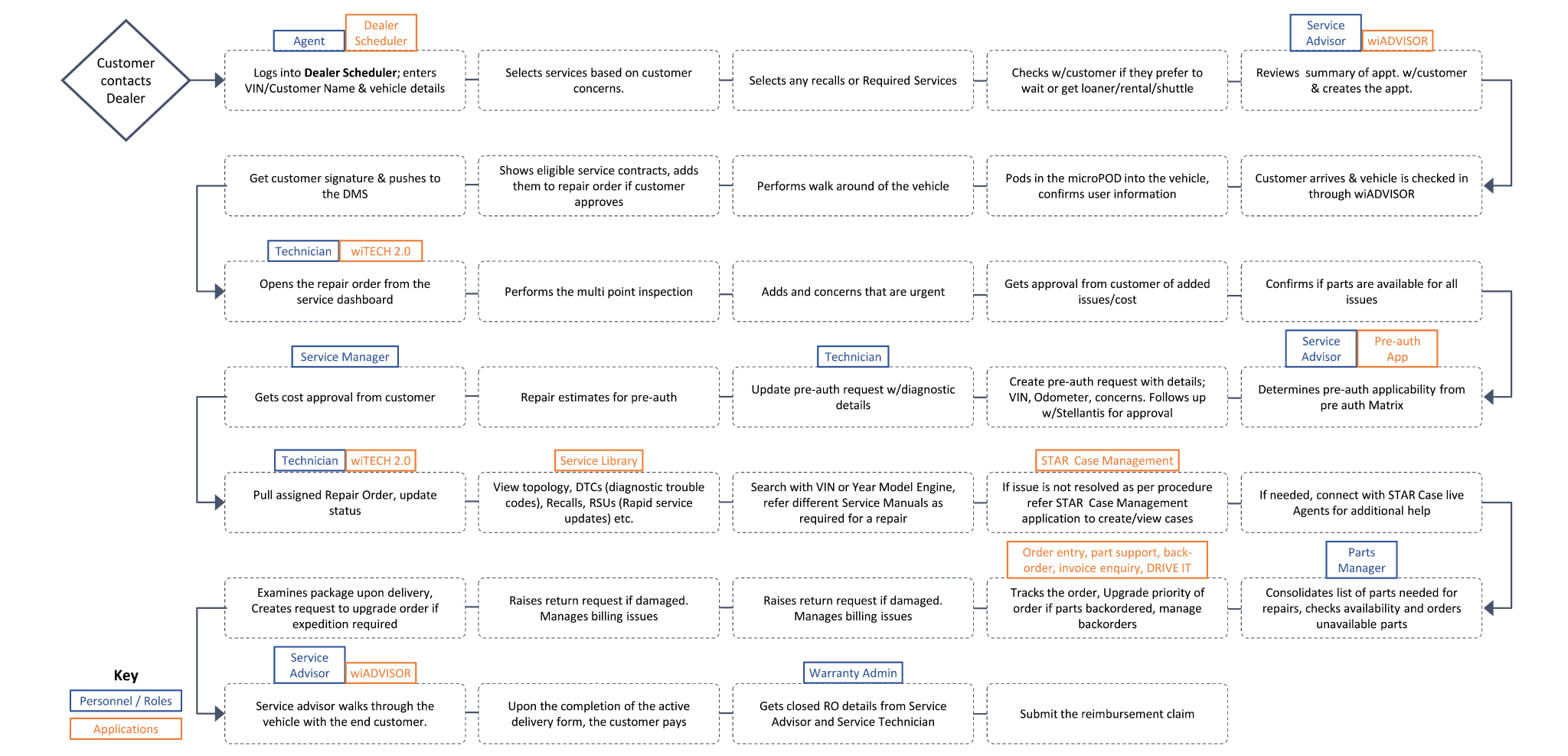
Current User Journey filled with multiple channels and unnecessary steps
02.
The same ecosystem needs to support 3 different users.
Sending a car to get serviced exchanges information between different teams internally.
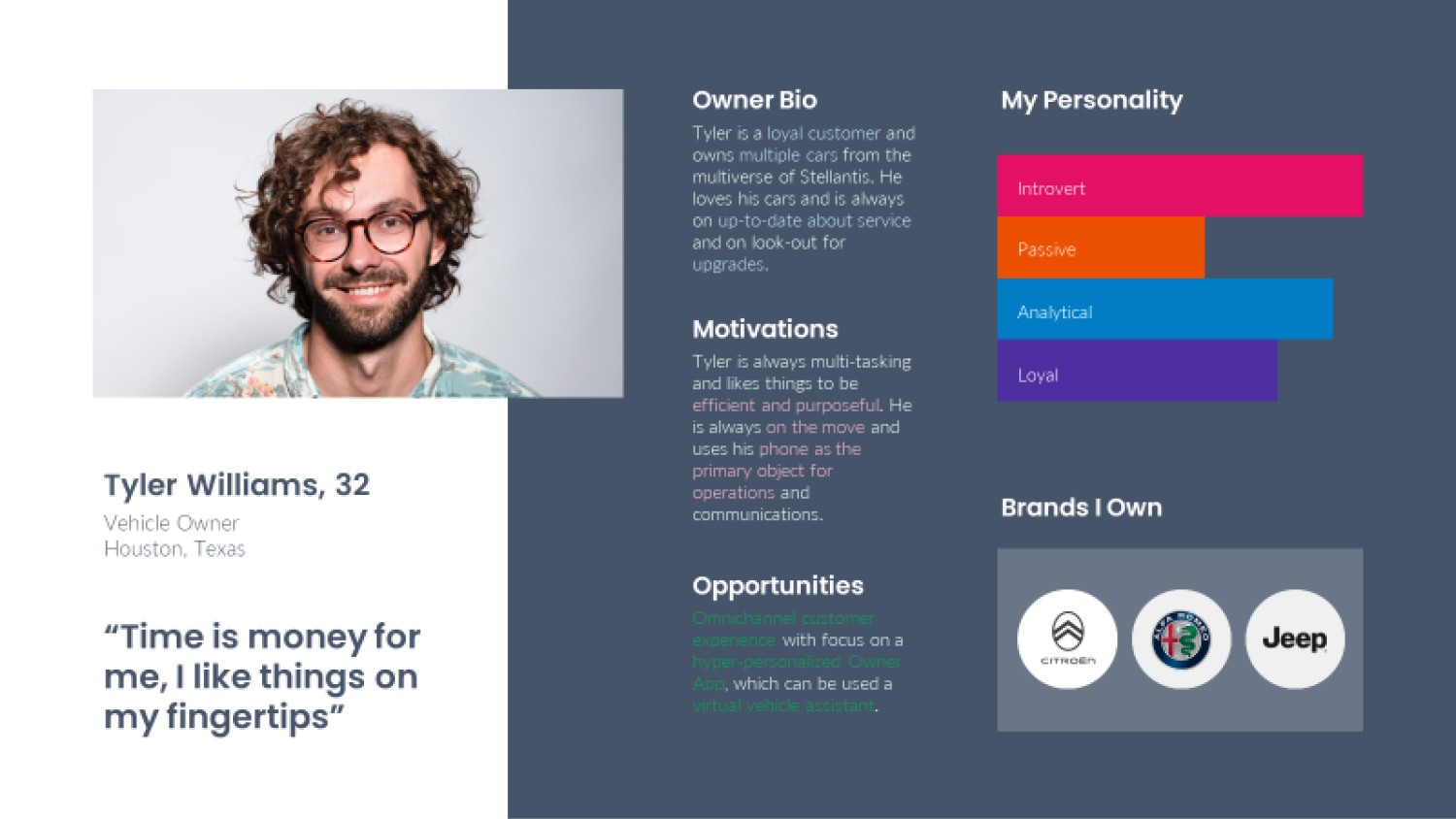
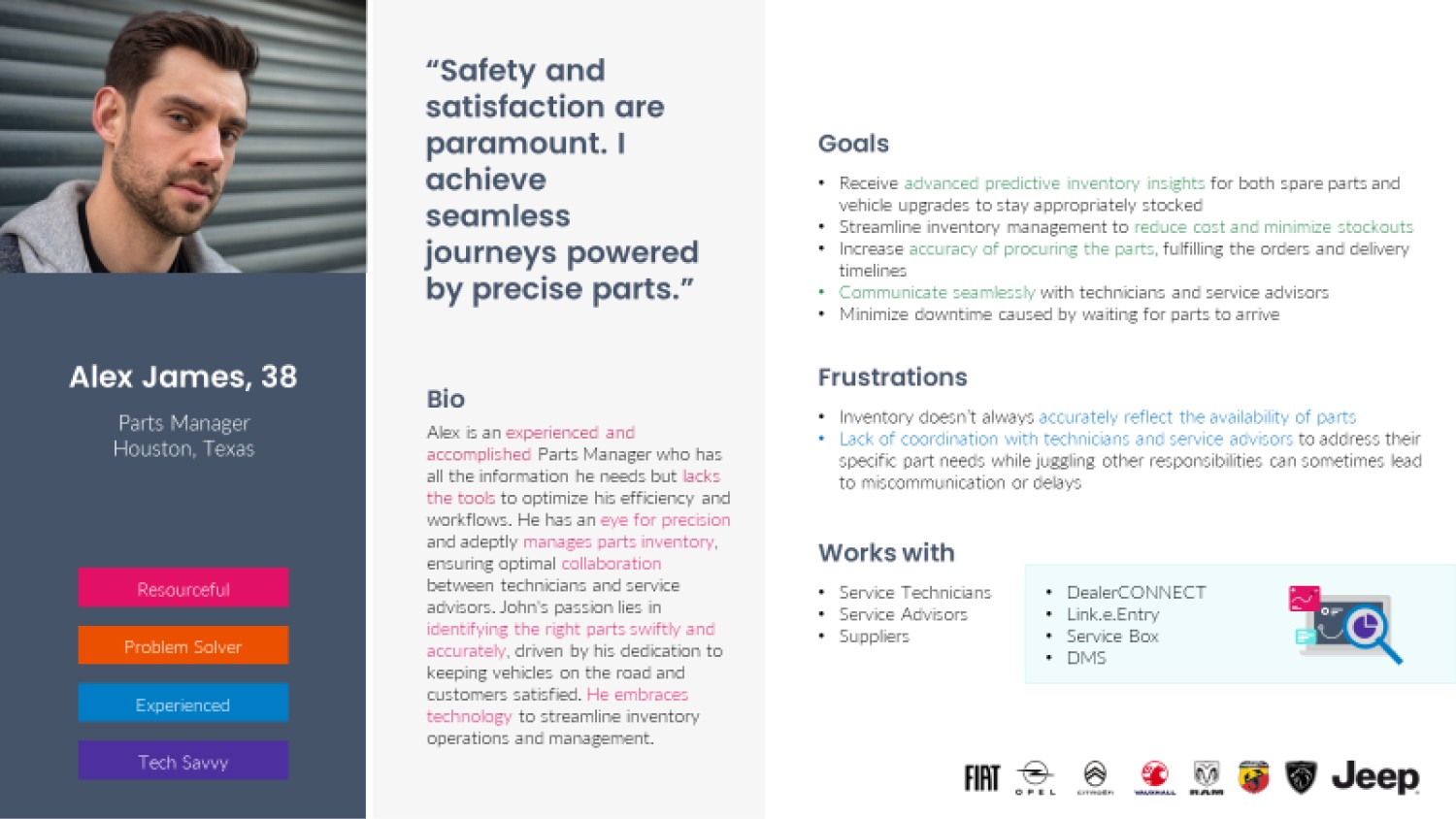
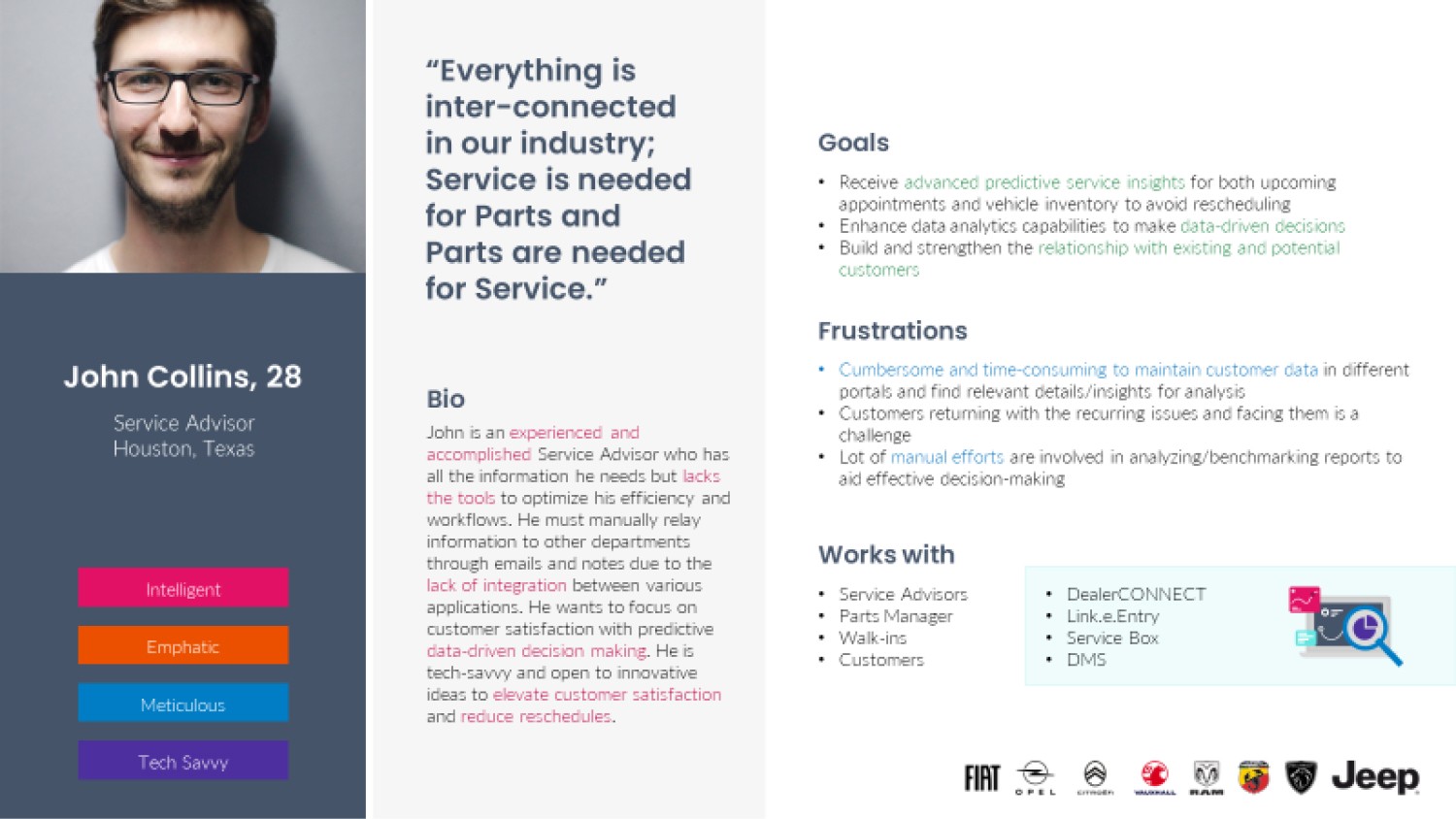
End user, communication employees and repair employees all should be able to access the same ecosystem.
03.
Designing a shared service experience.
If the user and employee journey is connected, the whole experience is a lot more seamless.
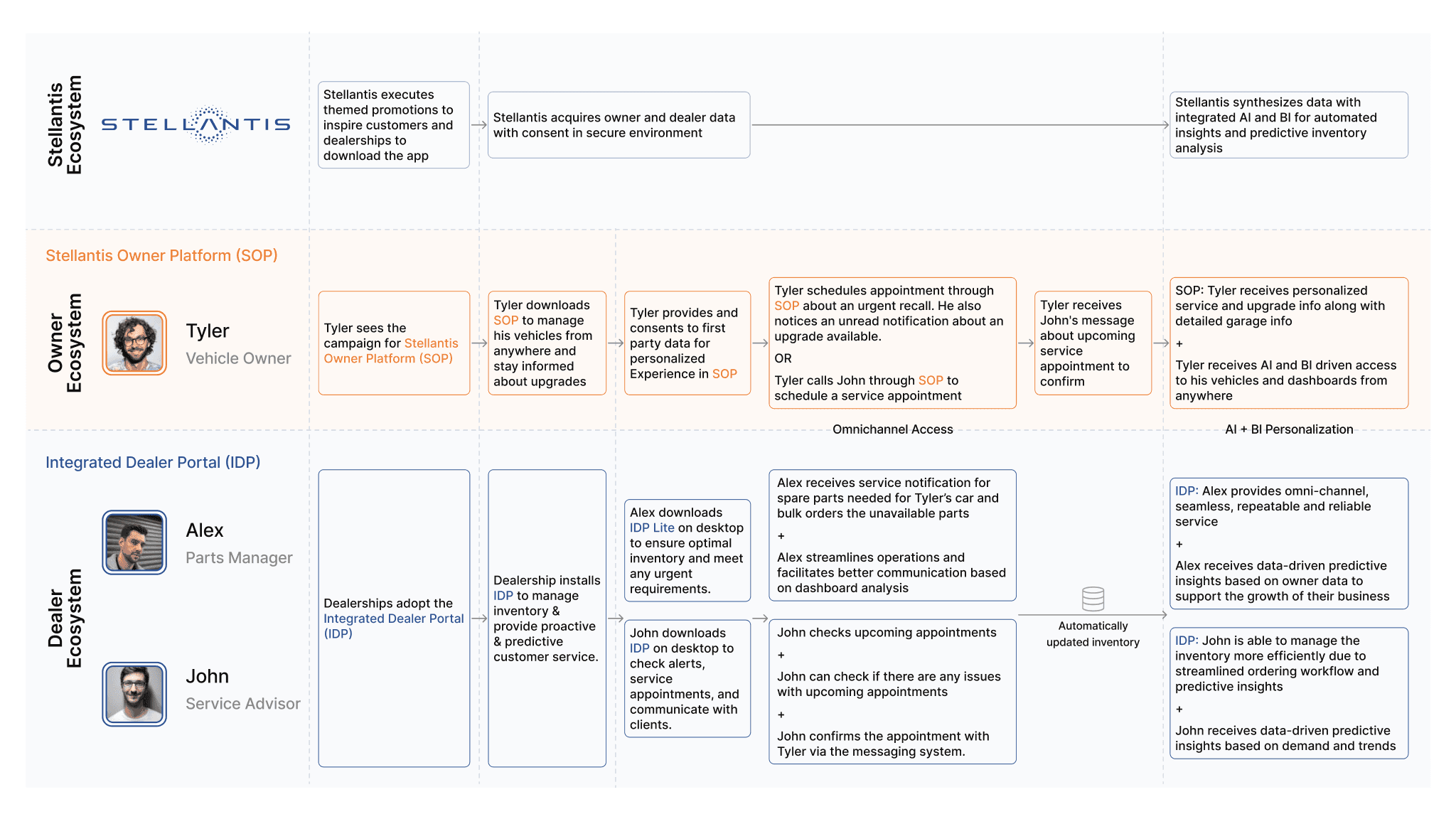
In new user journey, most actions can be effortlessly completed within the apps.
04.
Connecting the dots.
The new interface allows the customer to book a service through a mobile app, which sends the update to the service advisor that is able to coordinate with the client.
Once booked, the app for the service advisor is able to look at the parts needed and manage the inventory before the appoinment.
Part managers can order individual parts that are urgently needed.
A car owner can schedule an appointment on the app.