Product
Design
Using small objects to foster relationship between architects and marble supplier.
Client
Role
Design Strategist
Duration
6 weeks (February - March 2026)
Tools
Figma, Prototype Workshop, Illustrator
Project
Overview
Luce di Carrara already had the craft, history, and material expertise. Our project looked at how to make those qualities more visible to architects so it goes from being just a marble supplier to a partner they would want to return to.
Challenge
The factory visit made the brand feel alive: the scale of the stone, the machines, the hand-finishing, the history behind the material. The challenge was that this feeling is hard to communicate when you aren't t the factory.
Impact
Instead of designing one object, we created a system for building relationships over time with small objects and online portal. Creating an engaging system to maintain relationship with the architects beyond a single project.
Role
I worked on the research, strategy, concept development, storytelling and final presentation.
01.
The visit changed how we saw marble.
We spent a day at the factory in Carrara before getting the brief. The scale of the operation was mesmerizing. The entire process, from extraction to finished piece, is controlled in-house.
That end-to-end ownership turned out to be the brand's real differentiator.
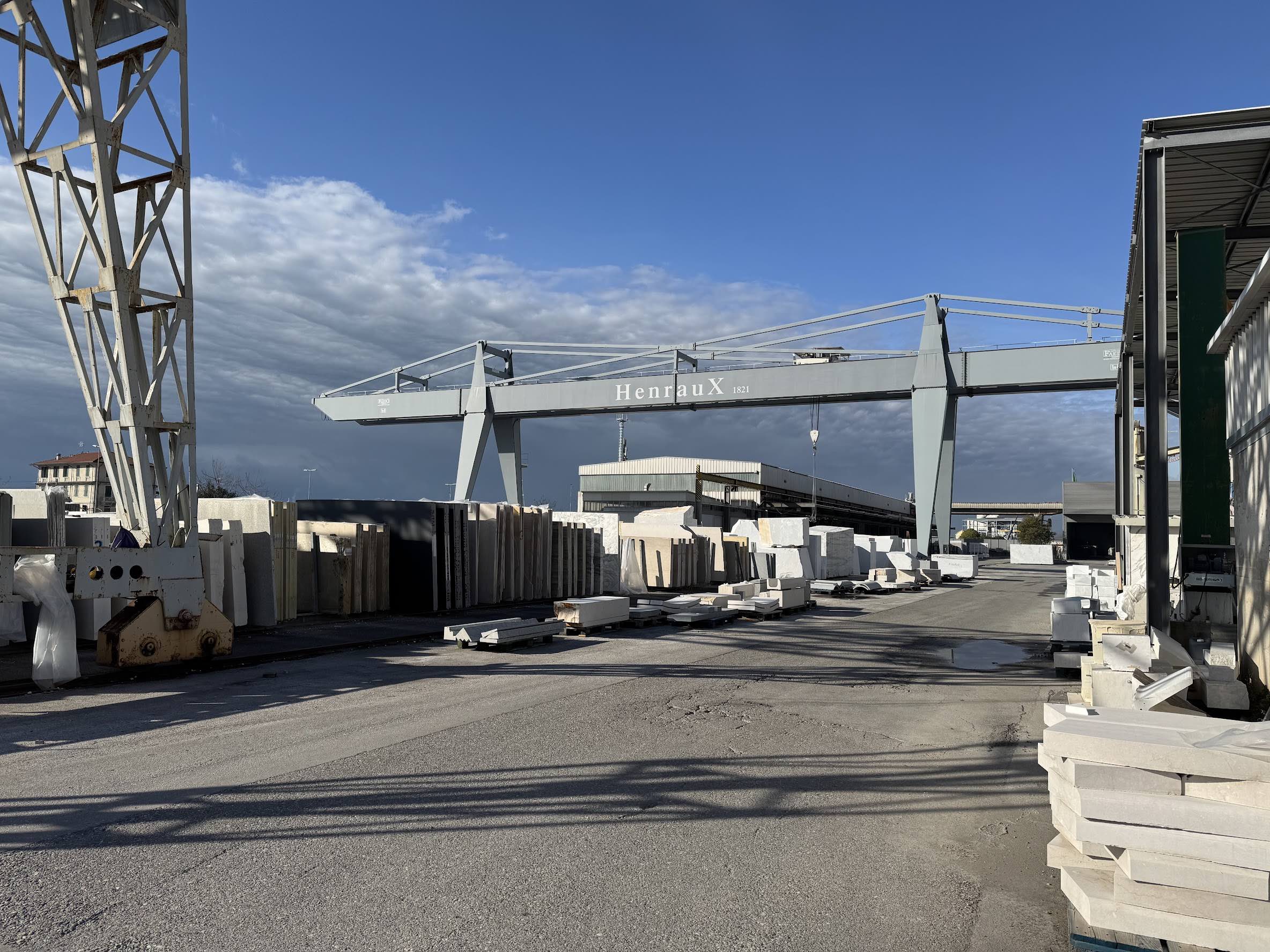
Inside the factory, scale, process, and craft all visible at once.
02.
There was a disconnect between the in person experience and online experience.
We interviewed architects and interior designers in Italy who had worked with the brand and mapped their experience against the brand's online presence. The pattern was consistent: in person, the brand communicates scale, craft, and trust. Online those qualities become almost invisible.
After visiting Luce di Carrara, you don't just want the object — you want a piece of that place. People connect to process, people, and imperfection, not perfection.
Interior designer, Milan
The market research confirmed what the interviews suggested. Every major competitor is moving toward democratisation with lower prices, wider distribution, more accessible finishes. That erodes margins and dilutes brand identity. Luce di Carrara's advantage of end-to-end craft and human touch is impossible to commoditise. But only if architects can actually feel it.
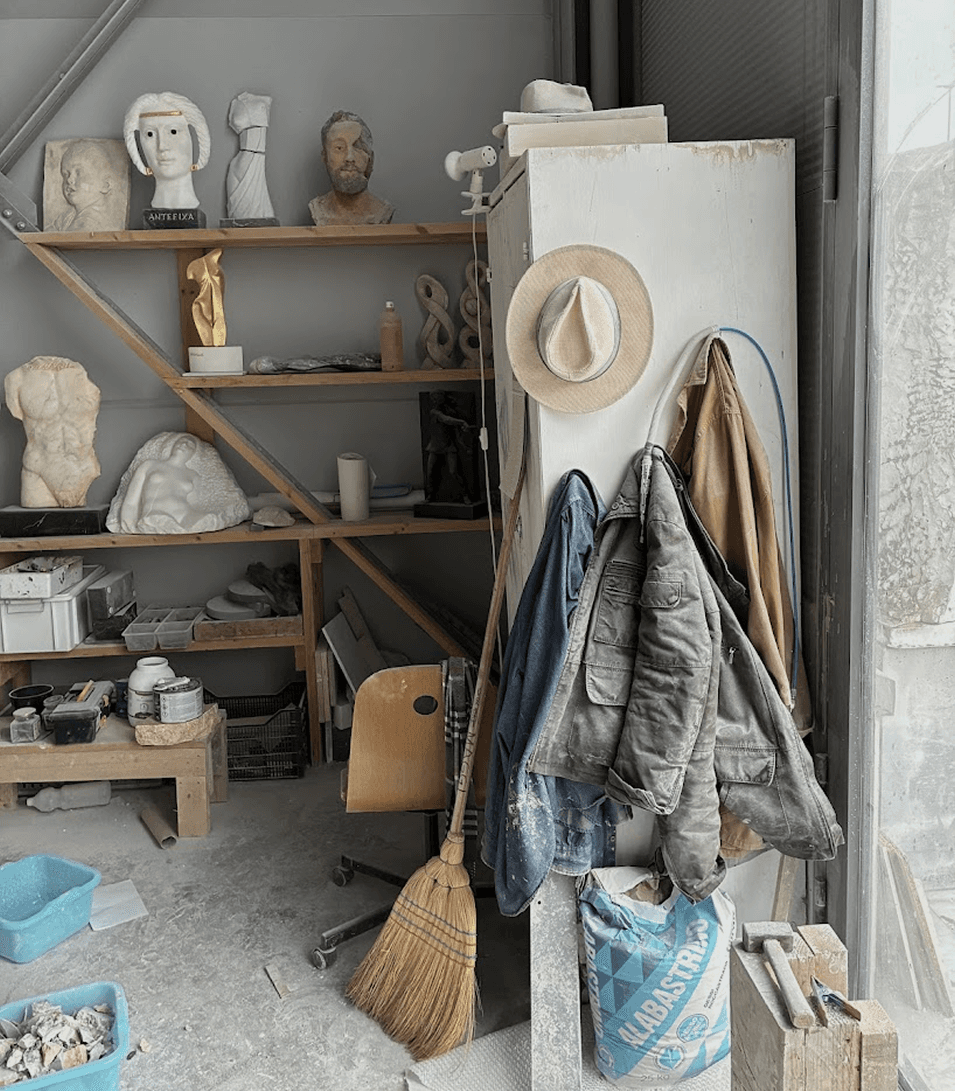
The disconnect: in-person experience (right) communicates everything the website (left) can't.
The insight that drove the strategy: architects who visit Luce di Carrara always want to work with them again. The goal wasn't to design better products, it was to design a better path to the first visit and a stronger reminder to stay after it.
03.
Relationships grow gradually.
Architect relationships with material suppliers are ongoing. An architect who specifies Luce di Carrara on one project might bring them into ten more over the next five years. The value of that relationship compounds, but only if the brand stays present between projects.
I mapped the full architect project lifecycle and identified where Luce di Carrara was currently visible (supplier selection, briefly) and where they weren't (everywhere else).
That gap shaped the strategy: two phases, six designed touchpoints, one compounding relationship.
Acquisition:
Invitation
A way to stand out in a digital world. Acts as the first introduction into the physical marble.
Experience
During the visit, expertise is experienced first hand. This builds trust by showing transparency.
Engage
The portal offers documentation and tools to support architects throughout the journey.
Retention
Belonging
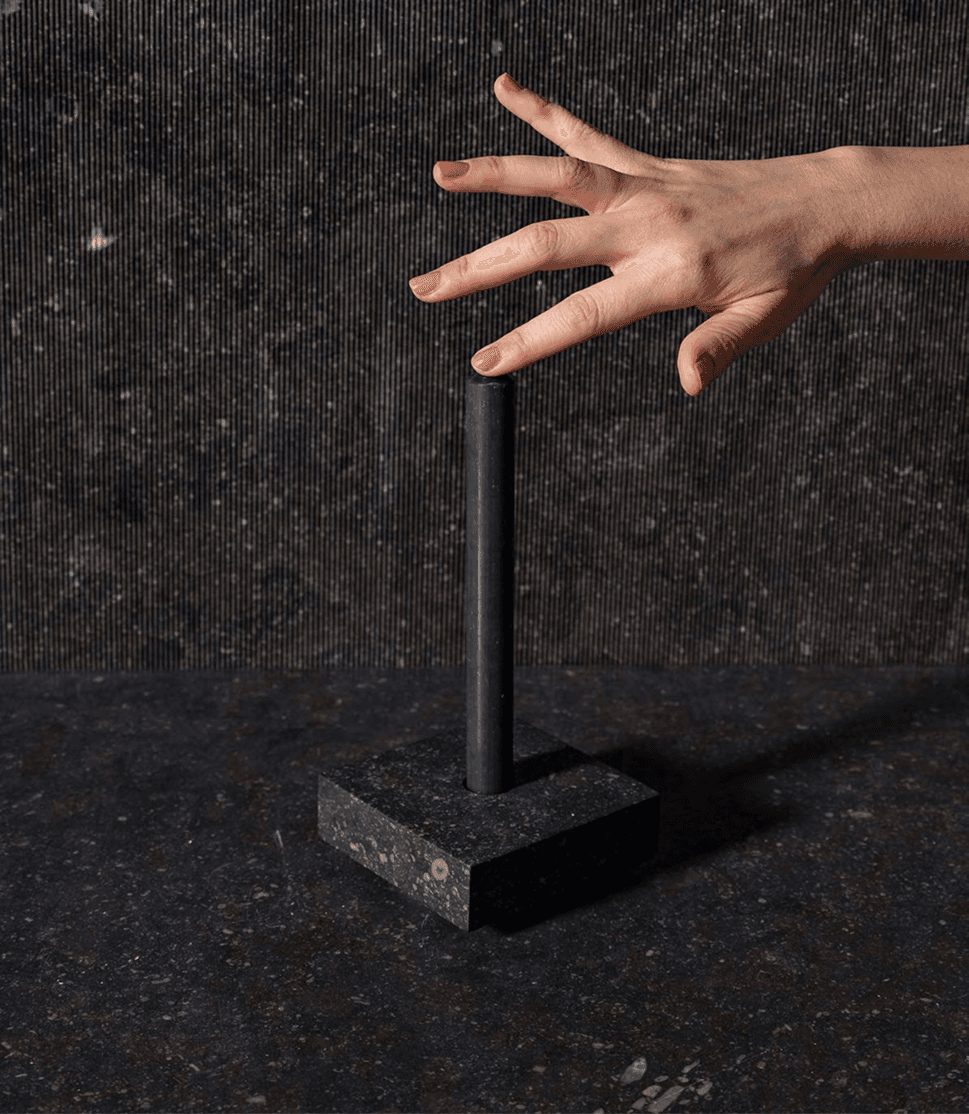
Gesti Minimi is living marble in architect’s everyday space influencing design decisions.
Notice
Featuring architects on Instagram strengthens relationship and positions itself as a design led brand.
Lifestyle
Gesti Minimi enters bathrooms, kitchens and horeca as standard products ensuring scalability.
04.
Designing the objects and building them in the lab
Both objects had to function as gifts, not samples. The difference is in whether the object earns a permanent place in the architect's space or gets filed in a drawer.

Archè
Acquisition object
A marble ruler which is functional and a direct demonstration of Luce di Carrara's capability to be present during the design decisions. Sent after Salone del Mobile, it's a material sample disguised as a desk tool.

Gesti Minimi
Retention object
Five small marble objects, each demonstrating a different processing technique: drill, texture, carve, waterjet, slab. Gifted after the architect's first completed project with Luce. Together they're a catalogue of capabilities as a quiet display for what's possible next.
05.
Designing the objects and building them in the lab
We prototyped both objects in the lab using a mix of wood and 3D printing. This had restrictions since marble has weight, temperature, and grain.
The constraint I set for both objects: they had to function as gifts, not samples. A sample says "here is our product." A gift says "here is our relationship." The difference is in whether the object earns a permanent place in the architect's space — or gets filed in a drawer.
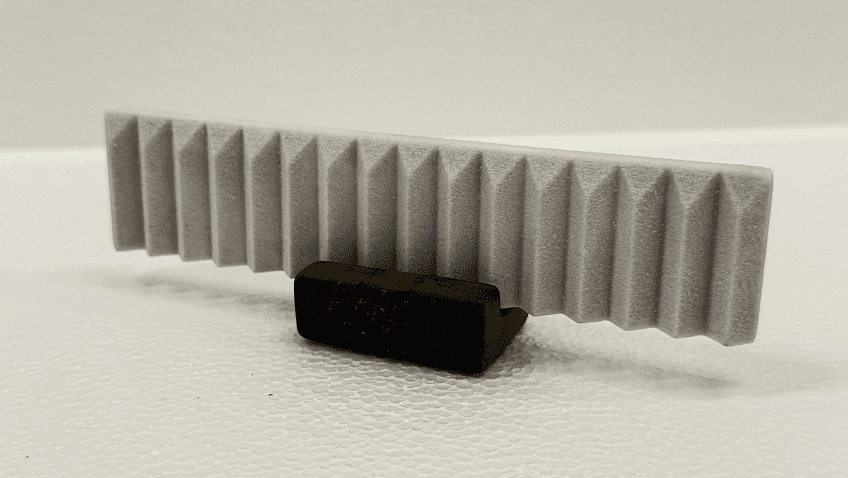
Archè
A tactile invitation that introduces the brand through craft.
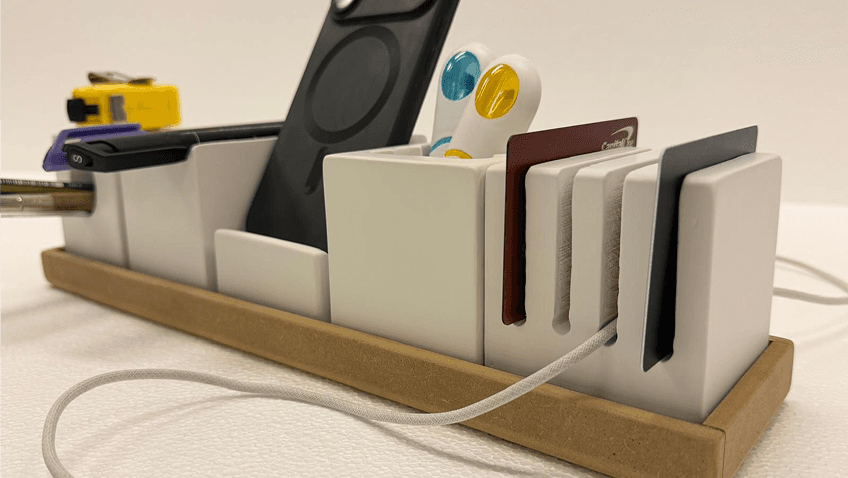
Gesti Minimi
A desk object that acts as a reminder for future collaboration.
05.
The shift from one moment of presence to the whole project cycle.
Instead of designing one standalone object, we created an architect engagement system.
The clearest way to see the strategy's impact is to map where Luce di Carrara appeared in the architect's project cycle before and after.

Before: linear, one touchpoint
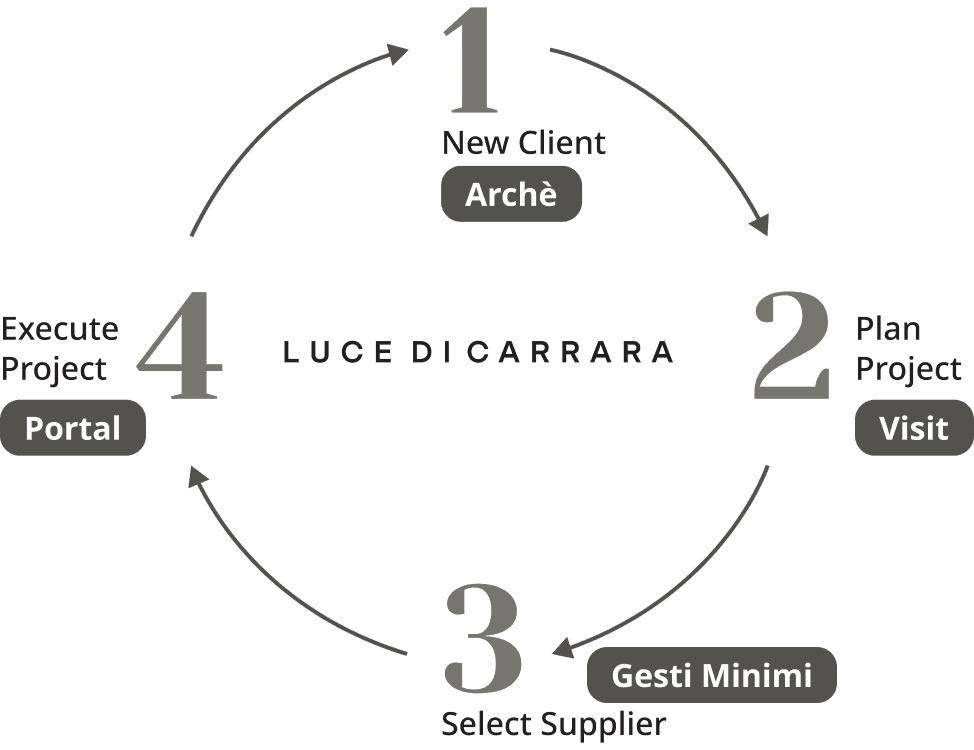
After: circular, every stage
Before, they only appeared at supplier selection already competing against lower-cost options. After, they exist at each step so Luce di Carrara is the first brand the architect thinks of when the next project start.
Architects are Luce di Carrara's most valuable relationship. The strategy was to design for that relationship the same way Luce di Carrara designs for marble with end-to-end control and attention at every stage.
The original ask was "design some objects." The more interesting problem was to design a system that makes architects want to come back. Reframing the brief early and connecting every design decision back to research and strategic goals helped make more impact.